





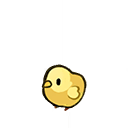
 Chick (W)
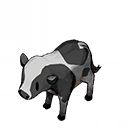 Calf (Bk & W)
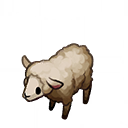 Lamb (W)
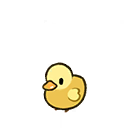 Duckling (W)
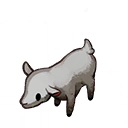 Goat Kid (W)
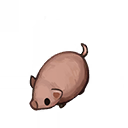 Piglet (Pk)
 Poult
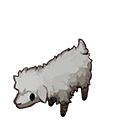 Cashmere Kid
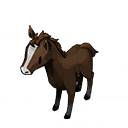 Foal (Br)
 Silkie Chick
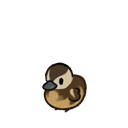 Mallard Duckling
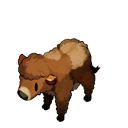 Fluffy Calf
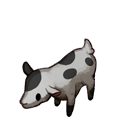 Spotted Kid
Chicken
 Egg
Possible products; you don't get all of them at once every time.
 Village in the Shade Wiki
Open it from your desktop or home screen like an app. Once installed it downloads everything so you can read offline; it won't download automatically on mobile data.
In Safari, tap Share, then Add to Home Screen.
Save every page, image and map in the current language to this device so you can read it without a connection.
All livestock are bought from Chinana, the street vendor. New kinds and colors go on sale once you meet the conditions below; usually her letter comes first.
On sale from the start.
From summer of Year 1.
After you first enter an animal in the Evaluation, whatever the rank. Horses are judged in a separate division and don't count.
A livestock animal (not a horse) gets A rank or higher at the Evaluation.
Score S at the Evaluation with a chicken.
Two different kinds of livestock have scored S at the Evaluation; horses count as a kind. Scoring S many times with the same kind still counts as one.
Once your first barn is built, Chinana writes that she's selling horses; you can also have Kisuke build a stable, and each stable holds 3 horses.
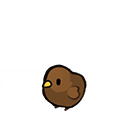 Chick (Br)
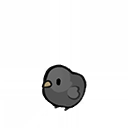 Chick (Bk)
 Duckling (Bk & W)
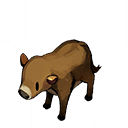 Calf (Br)
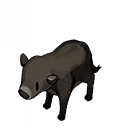 Calf (Bk)
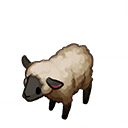 Lamb (Bk)
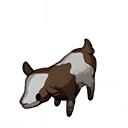 Goat Kid (Br)
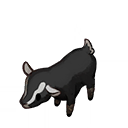 Goat Kid (Bk)
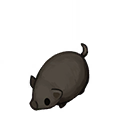 Piglet (Bk)
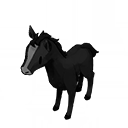 Foal (Bk)
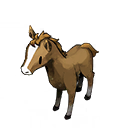 Foal (L. Br)
After you collect 20 products in total from adults of the same kind, Chinana writes that new colors are in stock. Each kind of animal is counted separately.
After meeting the Kodama in the Underground Passage in the second half of Chapter 5.
Likewise reach the second half of Chapter 5; the white kid goat must also be registered in your field guide.
 Dyed Chick (R)
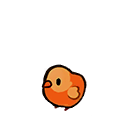 Dyed Chick (O)
 Dyed Chick (G)
 Dyed Chick (L. B)
 Dyed Chick (B)
 Dyed Chick (P)
 Dyed Chick (Gy)
Only sold during the Summer Festival on Summer 15. Chinana sells no other livestock during that time, and Dyed Chicks grow into roosters.
The Evaluation is held in the plaza on the 27th of each season from 10 AM to 4 PM; you bring one animal to the livestock division each time. The score is the affection level plus a mood bonus: +5 if mood is above "Good", +4 if above "Normal", +3 if not negative, +2 if negative. If the entered animal shares a barn with the Ghost Cow, mood counts as 100 at most, so it can't reach "Good" (180) and the mood bonus is at most +4.
Possible products; you don't get all of them at once every time.
Possible products; you don't get all of them at once every time.
Possible products; you don't get all of them at once every time.
Possible products; you don't get all of them at once every time.
Possible products; you don't get all of them at once every time.
Possible products; you don't get all of them at once every time.
Possible products; you don't get all of them at once every time.
Possible products; you don't get all of them at once every time.
Possible products; you don't get all of them at once every time.
Possible products; you don't get all of them at once every time.
Possible products; you don't get all of them at once every time.
Possible products; you don't get all of them at once every time.
Possible products; you don't get all of them at once every time.
Possible products; you don't get all of them at once every time.
A rooster's normal product table includes empty results and Feathers, so you can't estimate its income the way you would a hen laying eggs every day. The pig's table points to Truffles and the horse's to Horsehair; check the livestock panel for how to collect them and their status.
Young animals produce nothing until they grow up. Dyed Chicks of all seven colors grow into roosters with the same products.
The day after you sell an adult animal, a "Reward for Livestock Sale" letter arrives with items attached. Each letter always holds the same number of items: first the guaranteed amount of each item below, then the rest are drawn one at a time, so the same item can come up more than once. "Per draw" is the chance that a drawn item is that one. Selling a young animal sends nothing.
3 items, 1 of them drawn by chance
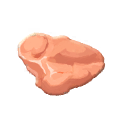 Raw Poultry1–2 · 40% per draw · 1.4 on average
 Feather1–2 · 30% per draw · 1.3 on average
 Chicken Tailfeather0–1 · 30% per draw · 0.3 on average · 30% to get at least 1
3 items, 1 of them drawn by chance
Raw Poultry1–2 · 40% per draw · 1.4 on averageFeather1–2 · 30% per draw · 1.3 on average White Duck Feather0–1 · 30% per draw · 0.3 on average · 30% to get at least 1
3 items, 1 of them drawn by chance
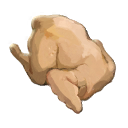 Raw Turkey1–2 · 40% per draw · 1.4 on averageFeather1–2 · 30% per draw · 1.3 on average
 Turkey Tailfeather0–1 · 30% per draw · 0.3 on average · 30% to get at least 1
12 items, 7 of them drawn by chance
7 items, 4 of them drawn by chance
 Raw Mutton2–6 · 65% per draw · 4.6 on average
 Small-Game Bones1–5 · 35% per draw · 2.4 on average
7 items, 4 of them drawn by chance
 Raw Goat2–6 · 55% per draw · 4.2 on averageSmall-Game Bones1–5 · 30% per draw · 2.2 on average
 Goat Horn0–4 · 15% per draw · 0.6 on average · 48% to get at least 1
7 items, 4 of them drawn by chance
Raw Goat2–6 · 55% per draw · 4.2 on averageSmall-Game Bones1–5 · 30% per draw · 2.2 on average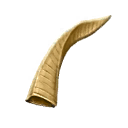 Cashmere Horn0–4 · 15% per draw · 0.6 on average · 48% to get at least 1
8 items, 5 of them drawn by chance
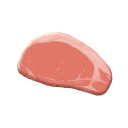 Raw Pork2–7 · 60% per draw · 5 on averageSmall-Game Bones1–6 · 30% per draw · 2.5 on average
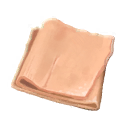 Pig Hide0–5 · 10% per draw · 0.5 on average · 41% to get at least 1
10 items, 6 of them drawn by chance
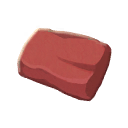 Raw Horse3–9 · 60% per draw · 6.6 on average
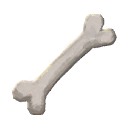 Big-Game Bones1–7 · 30% per draw · 2.8 on average
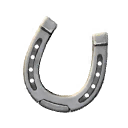 Horse Hoof0–6 · 10% per draw · 0.6 on average · 47% to get at least 1
livestock.dat: adult livestock IDs for young animals, the variable-length product tables and the sale gift (sellingInfo). village.exe: the sale gift gives the guaranteed amounts first, draws the remaining items one at a time by weight, and is mailed with the Reward for Livestock Sale letter (LETTER_ID_SELL_LIVESTOCK); young animals send nothing. Meat descriptions in item.dat: the gift arrives the day after the sale. shopsale.dat, the event_sale_start and event_holiday_fair scripts, and lettersend.dat: purchase conditions and Evaluation scoring. LIVESTOCK_MOOD_RATE_MAX_WITH_GHOST in gamedefine: the Evaluation mood cap with a Ghost Cow. TIPS_23_HOW_TO_LIVESTOCK, TIPS_50_INFO_LIVESTOCK and TIPS_54_WHISTLE_LIVESTOCK in tips.dat: care, checking status and whistles. How daily product chances and amounts relate to care hasn't been fully checked, so daily income isn't estimated here.
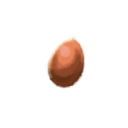 Duck Egg
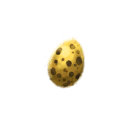 Turkey Egg
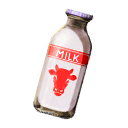 Milk
 Wool
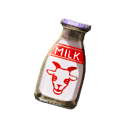 Goat Milk
 Cashmere
 Truffle
 Horsehair
 Raw Beef
 Cowhide
 Cow Horn